
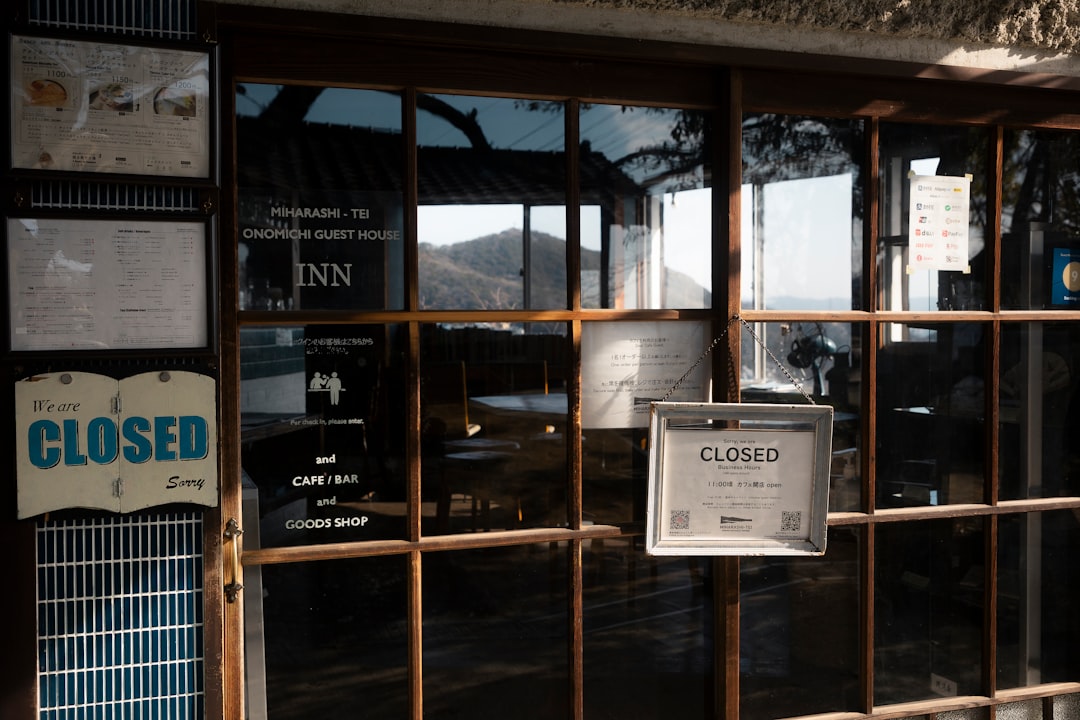
A closed storefront can be a useful local economic signal, but it is not a complete explanation.
Businesses close for many reasons: rent, debt, ownership changes, weak demand, poor execution, redevelopment, franchise decisions, staffing problems, relocation, retirement or a strategy that no longer fits the market. The storefront tells you that something changed. It does not automatically tell you why.
Start with what you can actually observe
Separate facts from interpretation. Useful observations include whether the property is vacant, whether another tenant is moving in, how long the space stays empty, whether nearby stores are opening or closing and whether the corridor appears to be gaining or losing traffic.
Then label assumptions as assumptions. This keeps a local-economy article or business decision from turning into unsupported speculation.
Owned resource
Need help turning the idea into a working business system?
Nacluv Tech is the owned implementation path when you need help with a website, local visibility, AI automation, e-commerce setup, video workflows or another approved business-growth system.
Look for patterns, not one-off events
One closure can be company-specific. Several closures in the same category, shopping center or corridor deserve a closer look.
Ask whether the pattern is concentrated around:
- one retail center or landlord;
- one type of business;
- one traffic pattern or road change;
- one price point or customer segment;
- a broader shift toward newer development nearby.
The value comes from comparing multiple signals. A closing restaurant beside three new openings tells a different story from a center where vacancies keep accumulating.
Watch what replaces the closed business
Replacement tenants can reveal more than the closure itself. If a former full-service restaurant becomes a fast-casual concept, medical office or service business, the property may still have demand even if the original format struggled.
If a large retail box is subdivided into smaller spaces, that may signal that the market supports smaller operators better than one large tenant. If the property is demolished for housing or mixed-use development, the land may have become more valuable for another use.
Use closures to identify customer problems
A closure can create practical opportunities without requiring you to copy the failed business.
Examples include customers losing a nearby service, employees entering the job market, a landlord needing a new tenant, surrounding businesses needing more traffic or a growing population lacking a replacement option.
The strongest opportunity is usually tied to a customer problem you can verify, not simply an empty building.
Amazon resource
Continue the business research with current best-selling books
Use the governed Amazon Business & Money destination to compare current books on entrepreneurship, operations, sales, finance and business building.
Browse Business & Money Best Sellers
Affiliate disclosure: As an Amazon Associate, Matrix Income Moves may earn from qualifying purchases.
Distinguish an operating problem from a market problem
A business can fail in a healthy market, and a good operator can struggle in a weak one. Before assuming the market is bad, look at nearby competitors, new construction, customer traffic and replacement activity.
If several comparable businesses remain busy, the closure may be more specific to the operator or location. If the whole corridor is weakening, the opportunity may belong somewhere else.
Pay attention to the surrounding ecosystem
Local business performance is connected to housing growth, commuting patterns, schools, employers, road access and the mix of nearby businesses.
A new apartment development can create demand for food, convenience, fitness and household services. A major employer leaving can reduce daytime traffic. A road redesign can change access even when the population stays the same.
These broader signals help explain why the same concept may work on one side of town and fail on another.
Use public information when the decision matters
If you are considering a lease, purchase or major business investment, casual observation is not enough. Review available zoning information, planning documents, property records, traffic studies, permits and other public sources that can confirm what is changing.
For a small test, you may only need enough evidence to decide where to spend the next few hours. For a large capital decision, the research standard should be much higher.
Build an opportunity checklist
When you spot a closure, record:
- what closed and what customer need it served;
- how long the space remains vacant;
- what businesses nearby are opening or expanding;
- whether traffic and development appear to be moving toward or away from the area;
- what verified customer problem remains;
- what low-cost experiment could test that problem without committing major capital.
This turns observation into a repeatable process instead of a guess.
Use closures as clues, not conclusions
Matrix Income Moves tracks business changes because physical locations can reveal real-world shifts in demand, development and customer behavior. But the useful lesson is rarely that one business closed. The useful lesson is what changed around it and what can be verified next.
Explore more examples in Business Closures & Retail History and Local Economy & Business Change. For a broader framework, see How to Spot Practical Income Moves Across South Atlanta.
Amazon resource
Use listening time to deepen the business skill behind the income path
The governed Audible destination can be useful when you want long-form business, career and self-development learning during driving, commuting or other low-focus time.
Affiliate disclosure: As an Amazon Associate, Matrix Income Moves may earn from qualifying purchases.
Photo credit: Gaku Suyama via Unsplash. A visible closure does not establish the cause of a business failure; verify material claims before making financial decisions.